A protected preview for colleagues, partners and participants. Enter the password to read the working paper. If you need it and don't have it, drop us an email.
Data from the 2025 Hard As Nails pilot. All findings are from validated psychological scales and qualitative instruments. Open for comment ahead of the 2026 national campaign.
Screengrabs shared by participants during the active period. Men posting photos of their painted nails alongside their own context and commentary.
Apparently the ring and first fingers are the 'accent' nails. Neon pink and 'smiley' yellow.
salon · accent nailsAfter weeks of trying, the coaches at my gym finally agreed to sign up. The morning after we shut the signups.
gym · coachingSurvived son's air cadets awards night with these bad boys. Wasn't kicked off the civilian committee, but there was some weapons-grade side eye going on.
air cadets · dadJust redid mine this morning!
daily lifeGot mine done just now (by my wife Gemma) she was delighted to do it, my daughter offered to help but was disappointed I wasn't going for a 'beautiful pattern'… my son asked when will they be dry so I can draw comic books with him.
wife · daughter · sonSat and had a nice conversation with my wife while we both did it nails.
couple · connectionLeft my eldest daughter with creative control, have ended up with what we've decided is Enchanted Toadstool. She's already planning next weeks design.
dad · daughter · enchanted toadstoolBut I'll be keeping my nails until they're not presentable any more, then I'll get the gels removed. They're still pretty good at the moment.
commitment · identityApparently the ring and first fingers are the 'accent' nails. Neon pink and 'smiley' yellow.
salon · accent nailsAfter weeks of trying, the coaches at my gym finally agreed to sign up. The morning after we shut the signups.
gym · coachingSurvived son's air cadets awards night with these bad boys. Wasn't kicked off the civilian committee, but there was some weapons-grade side eye going on.
air cadets · dadJust redid mine this morning!
daily lifeGot mine done just now (by my wife Gemma) she was delighted to do it, my daughter offered to help but was disappointed I wasn't going for a 'beautiful pattern'… my son asked when will they be dry so I can draw comic books with him.
wife · daughter · sonSat and had a nice conversation with my wife while we both did it nails.
couple · connectionLeft my eldest daughter with creative control, have ended up with what we've decided is Enchanted Toadstool. She's already planning next weeks design.
dad · daughter · enchanted toadstoolBut I'll be keeping my nails until they're not presentable any more, then I'll get the gels removed. They're still pretty good at the moment.
commitment · identityMen had their nails painted at a salon or at home. They kept a research diary during the one-to-two-week active period and lived their normal lives with the polish on. We measured them before, immediately after, at six weeks, and again at nine months.
The mechanism draws on expectancy violations theory (Burgoon, 2015) and cognitive dissonance (Festinger, 1957). Men enter an experience they expect to be uncomfortable, discover it largely isn't, and the gap between expectation and reality creates the conditions for norm re-evaluation.
Men enrolled across two pilot phases. 155 completed the pre-assessment, 122 immediate post-assessment, 66 at six-week follow-up, 51 at nine months. Recruited through word of mouth, social, and community partners across the UK.
Man in a Box scale (Heilman et al. 2017). Single-Item Trait Empathy Scale (Konrath et al. 2018). Conformity to Masculine Norms Inventory CMNI-22 (Mahalik et al. 2003).
Passively recruited via Prolific. Showed no significant change on any measure at any time point, supporting attribution of treatment group changes to the intervention.
Hard As Nails did not invent men painting their nails. Queer communities have been challenging gender norms through self-expression for decades, risking themselves far more than the men in this experiment ever got near. Black women defined modern acrylic nail culture. Black men in pop culture (ASAP Rocky, Travis Scott, Bad Bunny) made painted nails on men visible in the mainstream. Vietnamese nail artists built the salon craft we walked into. We are adding to that conversation. We did not start it.
A recurring finding in the data: many participants reported that the experience gave them a brief sense of what it feels like to be visibly different in public — a form of social risk most of these men had not previously encountered. We are not suggesting those experiences are equivalent. The data suggests the glimpse itself has value.
Men with the highest baseline investment in restrictive masculine norms showed the largest empathy gains by follow-up.
d = 0.404 · p = 0.034
The gap between what participants expected and what they experienced predicted the size of the empathy shift. The anticipated judgement was largely internal. This aligns with Precarious Masculinity Theory (Vandello and Bosson, 2013): masculinity perceived as a status requiring continuous proof is most susceptible to revision through disconfirming experience.
Significant drop in restrictive-norm endorsement (MIAB) at immediate post-assessment.
MIAB effect sustained and strengthened at six weeks.
Empathy gains not significant at immediate post but significant at six-week follow-up. A delayed trajectory.
Treatment group vs. control across all measurement points. Hover over charts for detail.
363 written reflections from the experiment and at six-week and nine-month follow-up. All anonymous. Searchable and filterable by theme and phase.
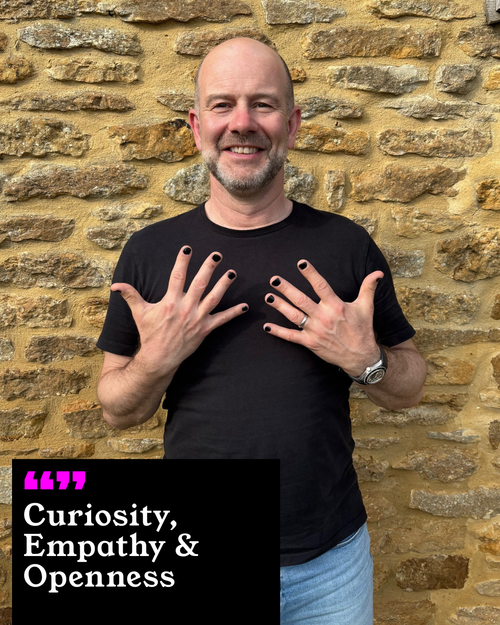
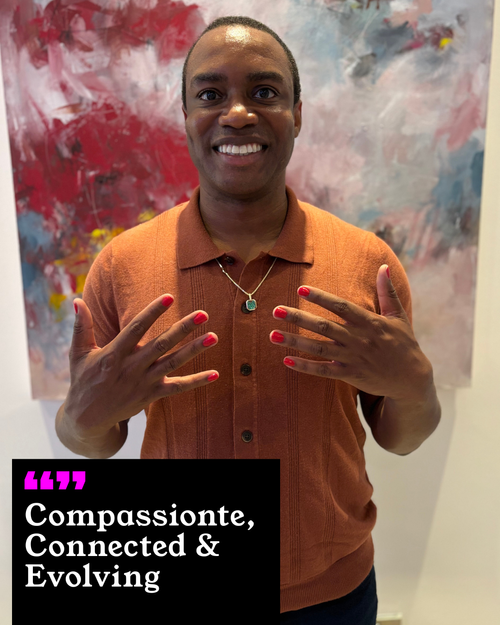
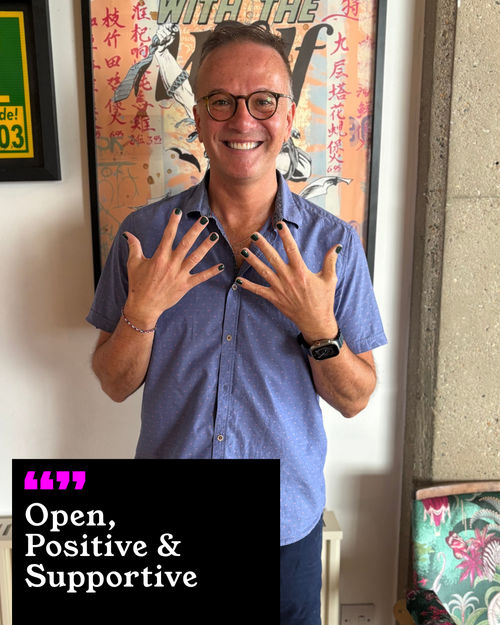
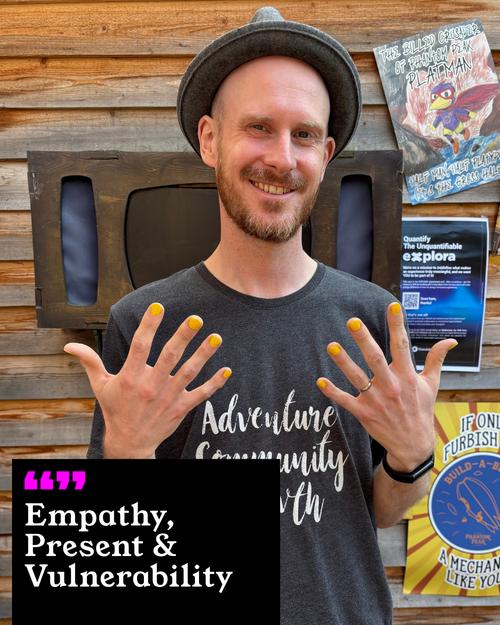
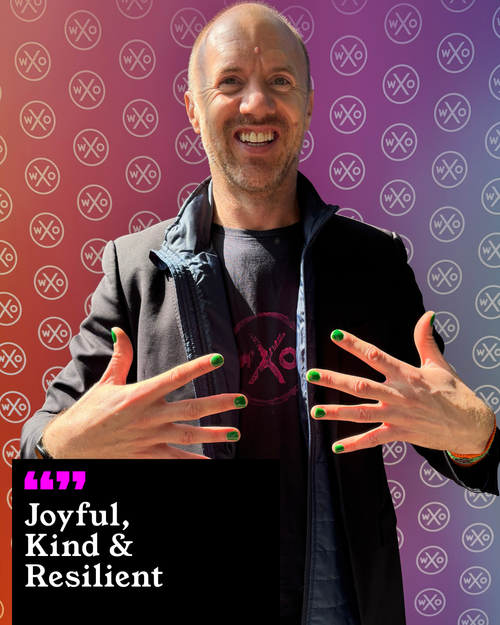
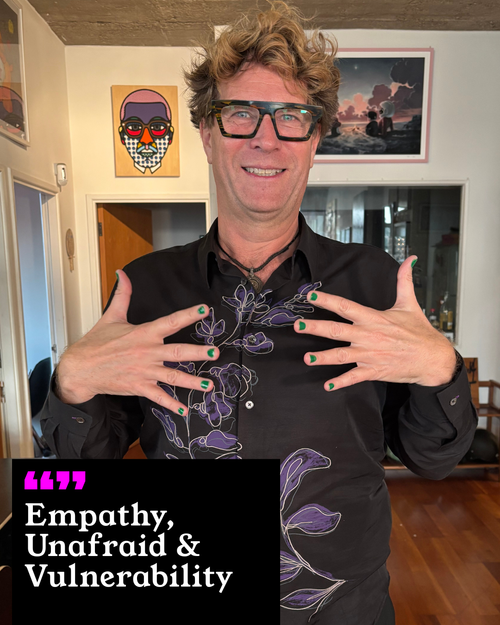
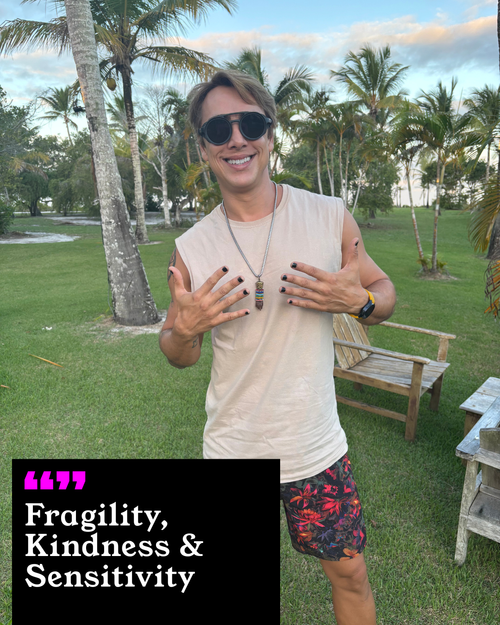
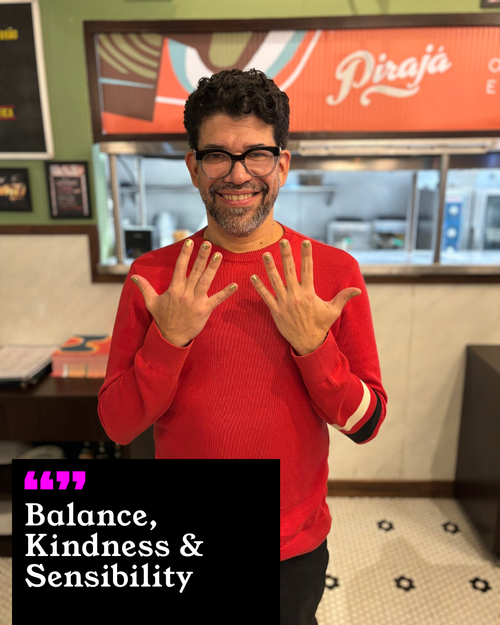
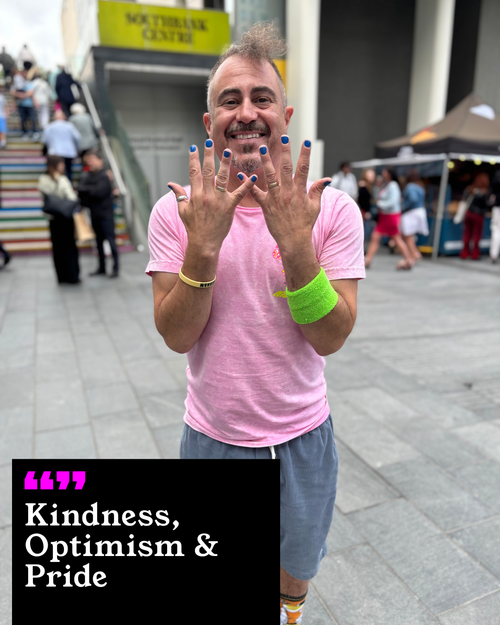
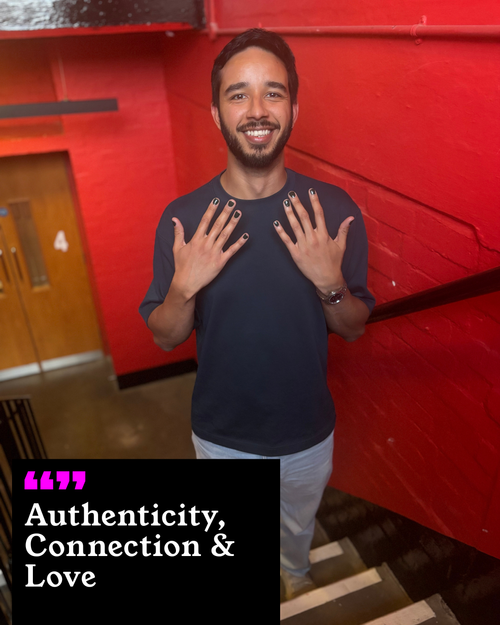
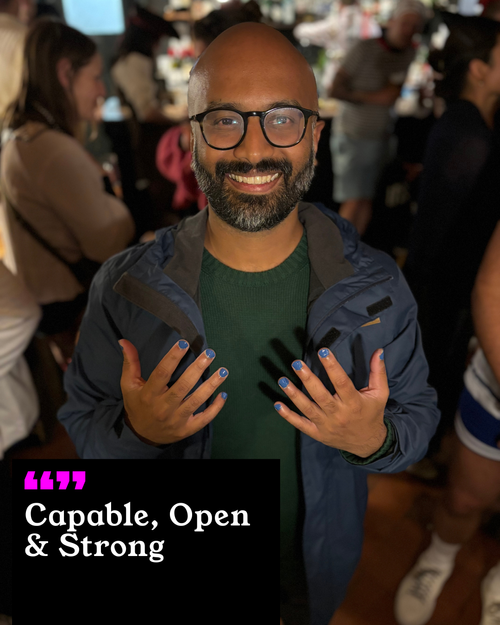
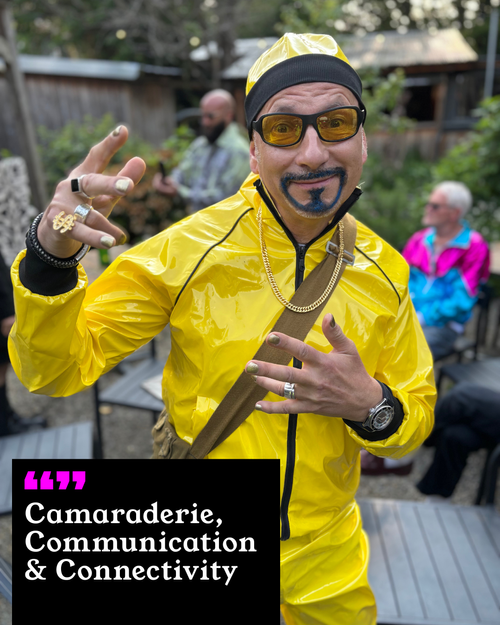
A parallel project by Daniele Fiandaca, painting the nails of 100 men as part of his nail technician training. Each participant was asked one question: "In three words, what does being a great man mean to you?" Qualitative and unmeasured, but the word patterns are worth noting.
A selection from the live gallery at hard-as-nails.com/100men. Click any portrait to see the full collection.
The most frequent words were empathy, kindness, openness and honesty.
Words like safe, gentle, supportive, loving appeared alongside brave, powerful, courage, strong. 99 valid responses, 297 word-tokens, 120 unique terms.
Whether these responses reflect how men want to present, or how they feel in this context, is an open question for further research.
Selfies submitted by participants across both pilot phases. Shared with consent.
Anonymous participant selfies, shared with consent. 422 men took part across the pilots.
The pilot sample was predominantly middle-aged, degree-educated, White British men in southern England. This is a known limitation. Pilot 3 is being designed with broader regional and demographic reach.
HAN draws on contemporary masculinity research that treats masculinity as an embodied, emotional and relational practice. Gough (2018) describes negotiation: men entering domains historically coded as feminine (appearance, emotional disclosure, care) and actively framing what they do in ways that protect their sense of self while expanding it. This aligns with participant behaviour observed across diaries, group chat and focus groups.
The men most invested in restrictive norms showed the largest shift.
They expected painted nails to threaten their masculine status. What they reported was curiosity, warmth, connection — and frequently relief. The discrepancy between expectation and lived experience is where the change is concentrated. d = 0.404, p = 0.034.
A visible, physical alteration to gendered appearance carried into ordinary settings. 21% of participants kept the polish on after the intervention period ended.
A documented shift from deflecting humour to disclosure across the qualitative corpus. 363 written reflections from diary, post-intervention and 9-month instruments.
Outward-facing behaviour change at 9 months: 90% reported a conversation about masculinity, 69% challenged a stereotype, 49% intervened on someone else's behalf.
Theoretical framing follows Gough, B. (2018). Contemporary Masculinities: Embodiment, Emotion and Wellbeing. Palgrave Macmillan. Cited in the working paper.
Chenoweth and Stephan's research on social movements suggests that sustained, visible participation by 3.5% of a population is associated with norm change becoming self-sustaining. For UK men aged 25–64, that figure is approximately 330,000 men.
Target: UK men aged 25–64. Based on 3.5% visible participation threshold.
of participants continued painting their nails after the experiment ended.
fifteen-year-old boys chose to paint a thumbnail at Thorns Collegiate Academy, Black Country.
October national activation. Five phases: Recruit · Build · Launch · Activate · Sustain.
Known limitations of the pilot research and what the 2026 study is designed to address.
75% White British, 70% degree-level, two-thirds in the South. Pilot 3 is being designed with broader regional and demographic reach.
Quasi-experimental design, appropriate for community-based research. A randomised design with an active comparison group would strengthen causal claims.
Participants reported effects on partners, children and colleagues. Future studies should measure those people directly rather than relying on participant self-report.
"If self-expression measurably increased, did self-confidence travel with it? Did it show up in other behaviours, in other corners of these men's lives, that we haven't measured here?"
Under consideration for the 2026 study design. Submit a question.